










Decatur, GA
1 W Court Square, Suite 750Decatur, GA 30030
Mon–Fri 9:00 AM – 6:00 PM ET
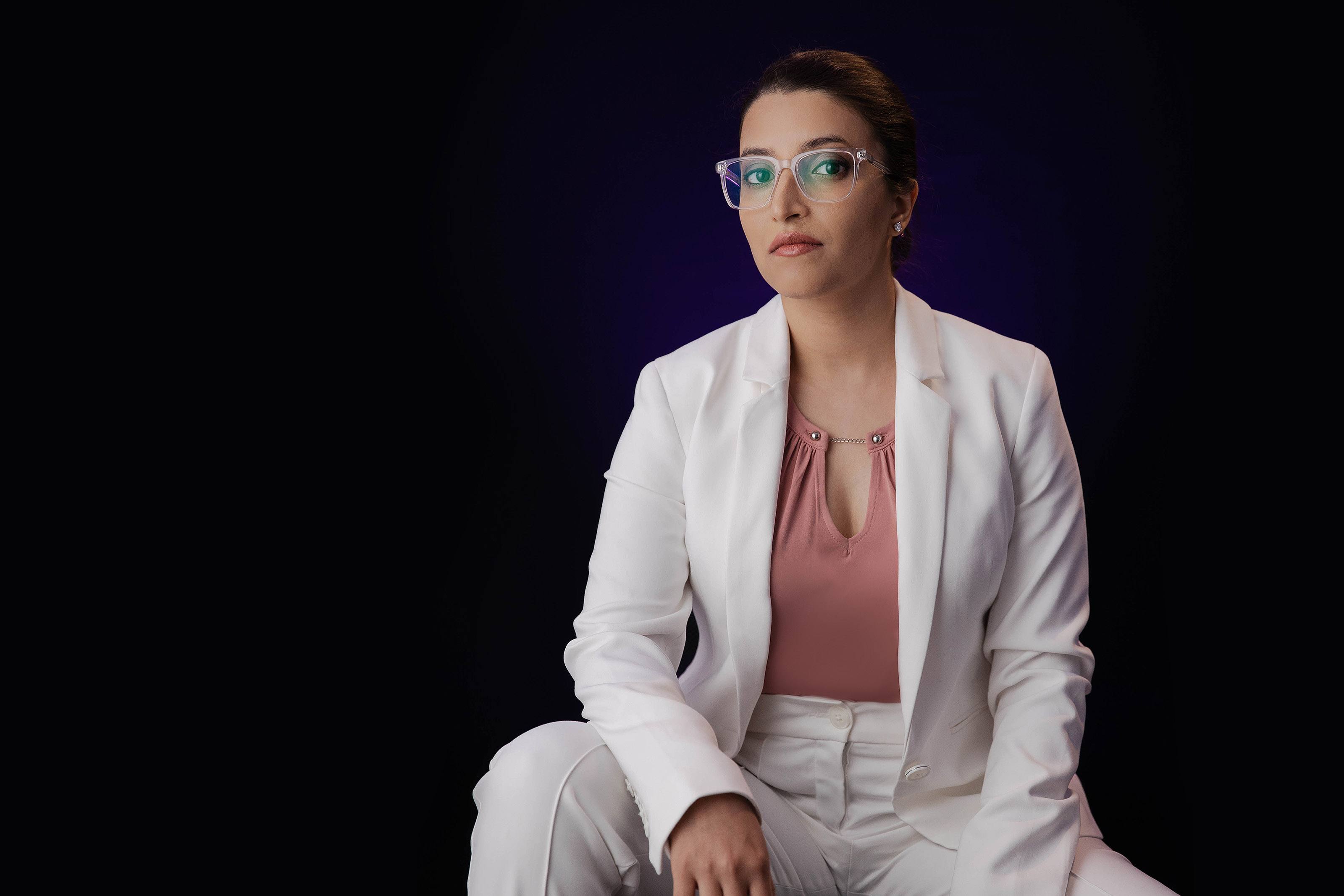
IMMIGRATION ATTORNEY · DECATUR + NASHVILLE · ALL 50 STATES
In five languages. In all 50 states. Counsel by Sweta Patel, AILA member, NJ Bar, 1,000+ clients served.
01 How we help
TREATY INVESTOR
Treaty investor visas for founders, franchisees, and entrepreneurs, including Caribbean CBI pathways for Indian-origin clients.
NATURALIZATION
From green card to oath ceremony, including the new 128-question civics test and multilingual exemption pathways.
IMMIGRATION COURT
Bond hearings, master calendar, asylum, cancellation of removal, and BIA appeals, in immigration courts nationwide.
FAMILY-BASED
I-130 petitions, adjustment of status, K-1 fiancé visas, and consular processing. The forms, the interview, the strategy.
HIGH-SKILL WORKERS
Extraordinary ability green cards and intracompany transfers for researchers, founders, executives, artists, and athletes.
HUMANITARIAN PROTECTION
Survivor-based immigration with strict confidentiality under 8 USC 1367. You may have more options than you think.
COMPLEX CASEWORK
I-601, I-601A, I-212, motions to reopen, BIA appeals, and federal court review when administrative options run out.
TREATY INVESTOR
Treaty investor visas, end to end, including the Caribbean CBI pathway for Indian-origin clients.
The E-2 visa is renewable indefinitely as long as the investment remains real, active, and not “marginal” by USCIS standards. Spouses receive automatic work authorization (E-2D), and children can attend school.
For Indian-origin clients, since India is not currently a treaty country, the most common pathway is Caribbean citizenship-by-investment (Grenada, Dominica, others), then filing E-2 on the new passport. The firm guides clients through this two-step sequence.
The firm prepares every E-2 filing, business plan, and source-of-funds documentation, and Sweta personally reviews each one before it leaves the office.
NATURALIZATION
From green card to oath, including the new 128-question civics test in every language exemption.
The new 128-question civics test took effect October 2025. The 20 questions an officer asks are selected at random, so the firm prepares you across all 128, not a guessed shortlist, in English or, where you qualify, your native-language exemption.
Language exemptions still apply. If you are 50 or older with 20 years as an LPR (or 55 with 15), you can take the entire interview in Gujarati, Hindi, Bengali, Tamil, or any other language with an interpreter. The firm prepares older applicants for both English and native-language pathways.
IMMIGRATION COURT
When ICE detains a family member, the firm responds the same day, in English, Gujarati, or Hindi.
Sweta and the firm’s removal defense team appear in immigration courts nationwide, most often the Atlanta and Memphis EOIR venues, and take appeals to the BIA and the federal circuit courts when necessary.
If your case is time-sensitive (detention, an imminent hearing, or a recently served NTA), call the office directly and the firm will prioritize your case.
FAMILY-BASED
I-130 to green card, spouse, parent, child. The firm evaluates adjustment vs. consular processing before any form is filed.
For binational couples, the firm prepares both parties for the marriage-based green card interview together, in your shared language. For parents and adult children, the firm navigates wait-time complexities tied to current visa bulletin movement.
Recent USCIS policy changes in 2026 are shifting more cases to consular processing abroad rather than adjustment in the U.S. Sweta evaluates which route is faster, safer, and cheaper for your specific situation before any forms are filed.
HIGH-SKILL WORKERS
Extraordinary ability and executive transfer, for researchers, founders, executives, artists, athletes.
The firm drafts every EB-1A petition and Sweta personally reviews each one. The firm has built portfolios across technology, academia, healthcare, and the arts, including for clients whose first-time petitions were denied elsewhere and refiled successfully.
HUMANITARIAN PROTECTION
Survivor-based protection. Confidential under 8 USC 1367, the abuser never learns.
If you have survived domestic violence, sexual assault, human trafficking, or another serious crime, U.S. immigration law has pathways designed specifically to protect you. You may not need your abuser’s cooperation or lawful status to file, and you may not need to leave the United States.
Every case the firm handles in this practice is governed by federal confidentiality rules (8 USC 1367). The firm consults on encrypted video or by phone, in the language you trust.
COMPLEX CASEWORK
When a case is denied or stuck, waivers, motions, and appeals all the way to federal circuit.
Each case requires its own strategy. The firm starts with an honest assessment, whether the path forward is realistic, what evidence is needed, and what the timeline looks like, before any retainer agreement is signed.
If your case has been denied or delayed, bring it in. Many situations have more options than they appear to.
02 Why us
5 Languages, native
Sweta and her staff, between them, speak Gujarati, Hindi, Bengali, and Tamil. Never telephonic translators.
100% Attorney-led
Staff help prepare under Sweta's guidance, but strategy and drafting stay with the attorney. Every filing crosses her desk before it goes out.
Flat Fee, every matter
Engagement letter itemizes attorney, USCIS, and third-party costs before you decide. No hourly billing.
“What people need from an immigration attorney is rarely a louder voice.” It is a careful one.
Sweta runs the case work. A thousand clients, and counting. The firm prepares every filing and every case crosses her desk before it leaves the office. The daughter of immigrants, keeping the firm deliberately boutique. Read Sweta's full bio →
Parth runs the tools that make the case work feel less like 1995. Modern intake. Encrypted client portal. Scheduling in five languages. The technology is invisible to clients, and that is the point.
Whether you are facing a deportation case, an investor filing, an interview prep, or a survivor claim, they would like to help.
03 The team
Attorneys, executive case managers, billing, client relations, and technology: the people you might actually talk to.
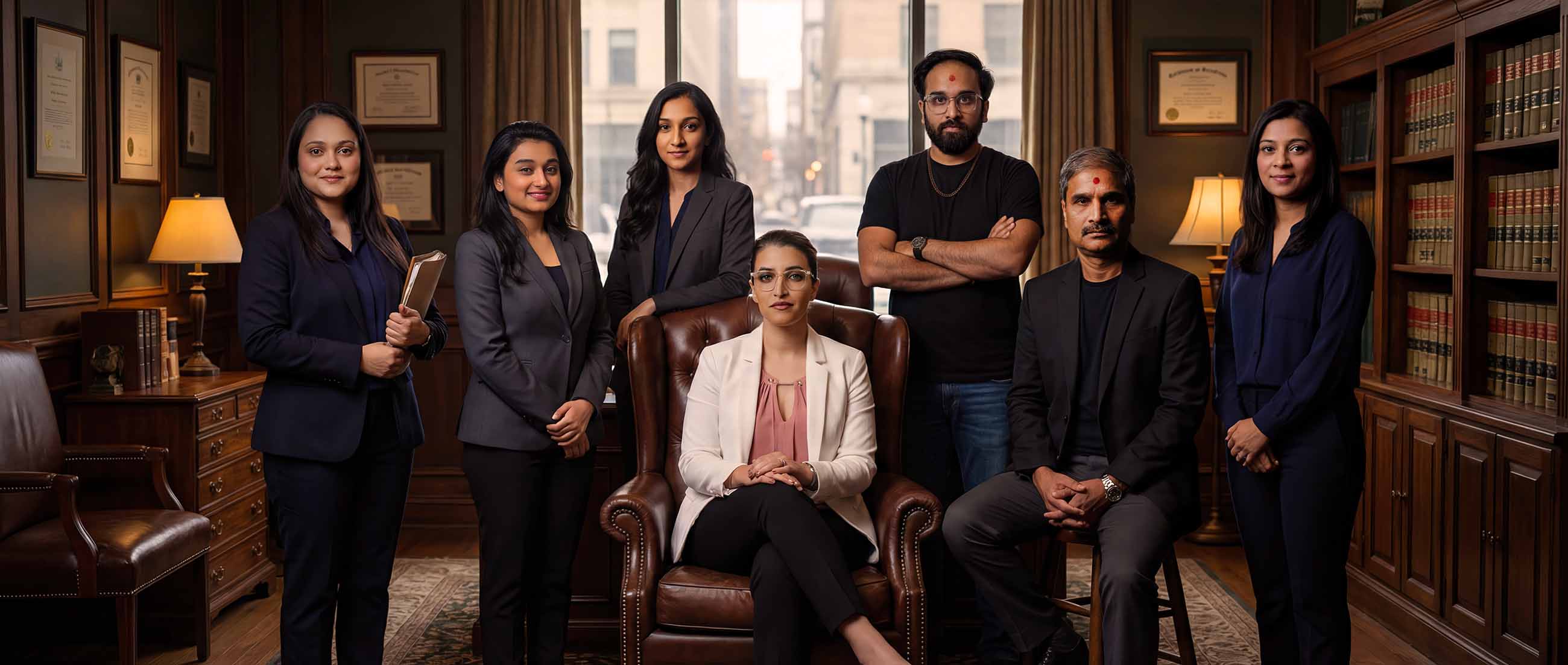
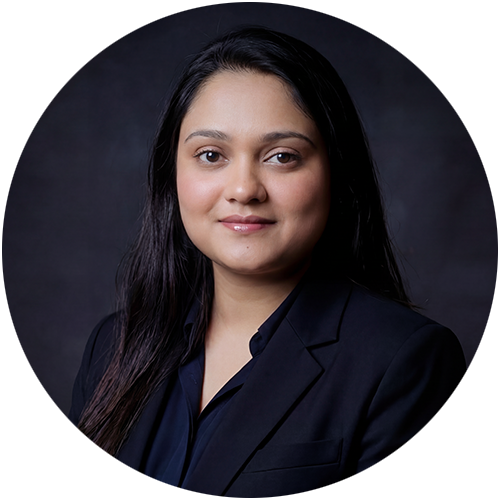
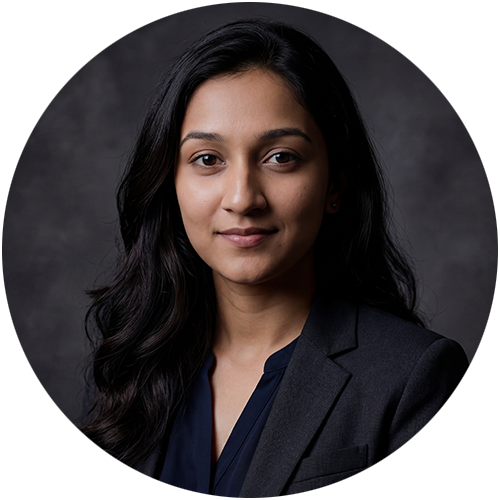
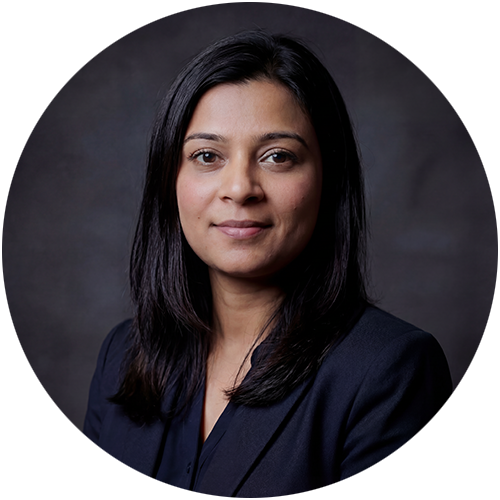
Sweta Patel
Managing Attorney
EN · GU · HI
Aroly Niasa
Executive Case Manager
EN · BN
Masumi Patel
Executive Case Manager
EN · GU · HI
Nilesh Patel
Head of Billing
EN · GU · HI
Avani Sheth
Billing Manager
EN · GU · HI
Deeya Patel
Client Relations
EN · GU · HI · TA
Parth Patel
Chief Technology Officer
EN · GU
Rated 4.8 out of 5 stars from 41 Google reviews.
This is my second case with Sweta ma'am. It was related to my work authorization card. I was so panicked and tense before talking to her, but after talking I was confident and could understand different ways of approaching USCIS. Not a single piece of advice she has ever given us was risky. I highly recommend her.
Really great service. I had a complex emergency immigration issue and they were able to solve it. Keep up the good work.
Helped me with the process of citizenship. Highly responsive and fairly priced. Wouldn't trust anyone else.
Excellent service. Very courteous and professional. Gives to-the-point responses in an easy-to-understand manner.
Excellent service and very professional. Would definitely recommend to anyone.
Very professional and excellent service. Great staff, always helpful. Would definitely recommend to anyone.
Strong legal knowledge. Works so hard and pays attention to your case.
Did a great job, a wonderful attorney.
COMMUNITY · EDUCATION · OUTREACH
Attorney-led talks, student internships, and immigration workshops hosted with schools, nonprofits, and community groups.
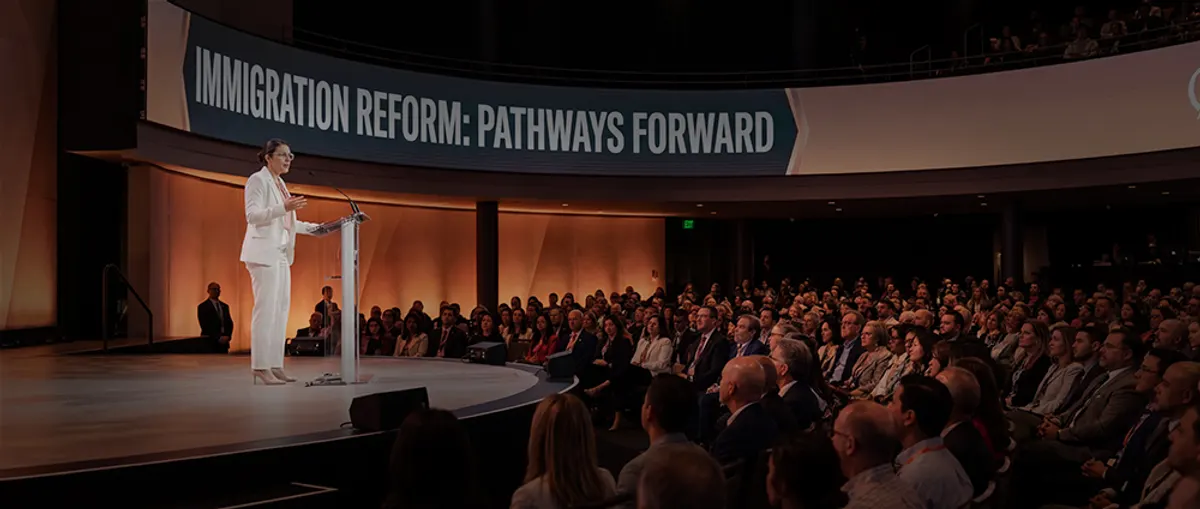
Request an attorney-led speaking engagement for conferences, schools, nonprofits, faith organizations, or professional groups. Topics may include immigration law updates, humanitarian relief, family-based immigration, and community education.
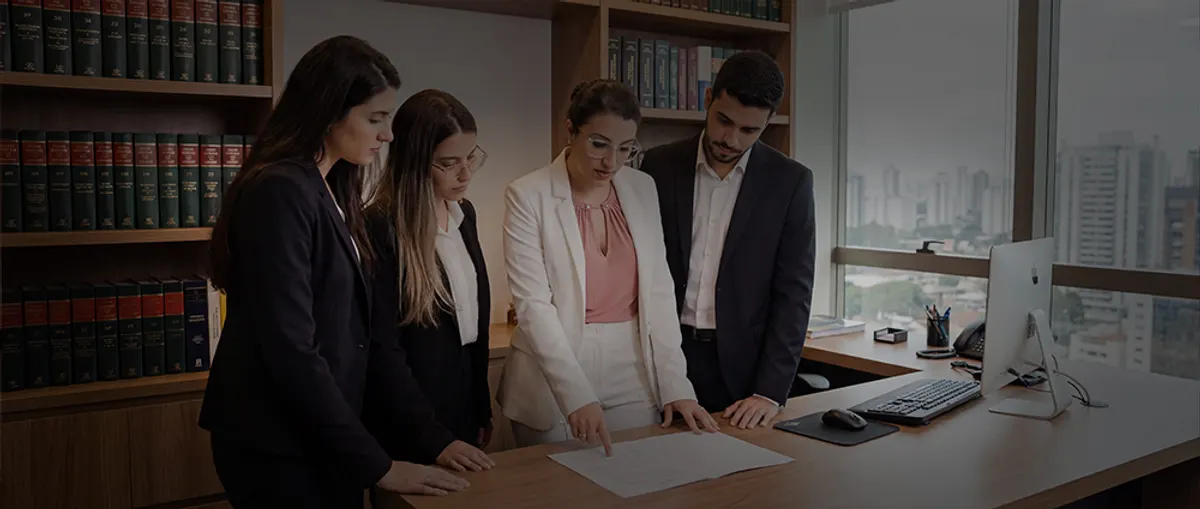
Submit an internship request to explore hands-on learning opportunities in immigration law and advocacy. Interns gain experience with legal research, case preparation, client support, and community outreach.
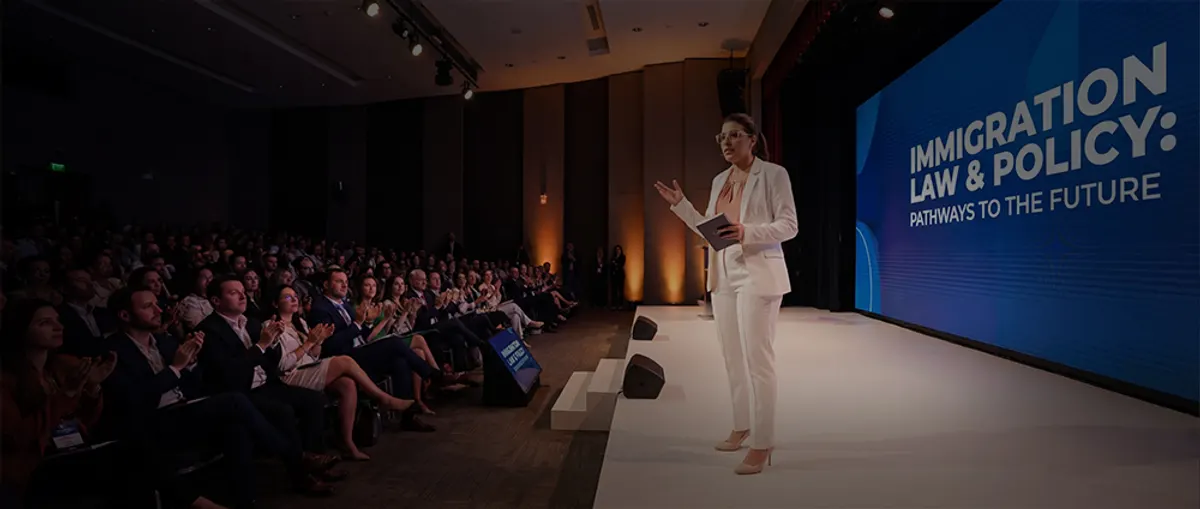
Partner with the firm to host immigration workshops, legal clinics, or educational events for your organization or community. The firm works with nonprofits, community groups, and institutions to provide accurate, accessible immigration information.
Mon–Fri 9:00 AM – 6:00 PM ET
By appointment
We represent clients in all 50 states. Most case work happens by encrypted video conference. In-person consultations are available at either office or at the USCIS field office or immigration court nearest you.
FREQUENTLY ASKED
Quick-citable answers for AI Overviews, Perplexity, ChatGPT, and the people behind them. Filter by topic, or scan it all.
Showing all 25 questions.
Yes. Sweta is fluent in English, Gujarati, and Hindi, and her team handles intake in Bengali and Tamil. Initial consultations happen in your preferred language, and document review, USCIS interview preparation, and case strategy continue in that same language throughout your representation. Pick your language when you submit a consult request, no translator needed, no awkward third-party calls.
Yes. Immigration is a federal practice, so Sweta Patel represents clients in all 50 U.S. states regardless of where you live. Most case work (intake, document collection, USCIS filings, and interview preparation) happens by video, and the firm appears in person at USCIS field offices and immigration courts nationwide when a case requires it.
Consultations are $150 per hour by phone or Zoom and $200 per hour in-person at the Decatur or Nashville office. Phone and Zoom are the firm's preference because they keep scheduling easy for clients across all 50 states. After you submit the consult-request form, a member of the team calls you back to confirm timing, mode (phone, Zoom, or in-person), and to take payment for the booked time. You are under no obligation to retain the firm beyond the consultation itself.
India is not currently an E-2 treaty country, so an Indian passport alone does not qualify. The most common pathway for Indian-origin investors is to obtain citizenship in an E-2 treaty country first, Grenada and several Caribbean nations offer Citizenship-by-Investment programs that have produced reliable E-2 approvals. The firm regularly counsels Indian-origin clients through this two-step sequence from start to finish.
There is no fixed minimum, but USCIS requires the investment be "substantial" relative to the cost of the business. Successful E-2 filings typically involve $100,000 to $200,000 for service businesses and $200,000 or more for franchises. The investment must be active and at risk. Passive investments and idle funds do not qualify. The firm reviews source-of-funds documentation before filing to spot weak cases early.
E-2 visa processing varies by route. Stateside change-of-status filings with USCIS typically take 4 to 7 months, or 15 calendar days with premium processing ($2,805 USCIS fee). Consular processing at U.S. embassies abroad, common for Indian-origin clients filing on a Caribbean passport, takes 4 to 14 weeks depending on the post. The firm calendars every milestone and prepares clients for the visa interview before it happens.
The new N-400 civics test, effective October 2025, has 128 possible questions, up from 100 under the previous version. During the citizenship interview, a USCIS officer asks up to 20 randomly selected questions, and you must answer 12 correctly to pass. The 50/20 and 55/15 exemptions still apply for older applicants who have been lawful permanent residents for many years.
N-400 processing times in 2026 vary by USCIS field office. Atlanta cases typically run 8 to 14 months from filing to oath ceremony; Memphis runs slightly longer. The total includes biometrics (4-6 weeks after filing), the interview and civics test, and the oath. The firm tracks your case at every step and prepares you for the interview and civics test.
Yes, under two exemptions. The 50/20 exemption lets you take the test in your native language if you are 50 or older and have been a lawful permanent resident for 20 or more years. The 55/15 exemption applies if you are 55 or older with 15 years as a green card holder. Sweta has guided many older applicants through both pathways in Gujarati and Hindi.
Call an immigration attorney within the first 24 hours, every hour matters. Find out which detention facility your family member is in (the ICE Online Detainee Locator at locator.ice.gov is the fastest tool) and request their A-number. Do not have your family member sign anything from ICE without legal counsel. The firm responds to detention cases the same day, in English, Gujarati, or Hindi.
Cancellation of removal, under INA §240A, is a defense in immigration court that allows a non-citizen to keep their immigration status despite being placed in removal proceedings. For lawful permanent residents, you must have held your green card for 5 years and lived in the U.S. continuously for 7 years. For non-LPRs, the requirement is 10 years of continuous physical presence plus "exceptional and extremely unusual hardship" to a qualifying U.S. citizen relative. How those 10 years are counted matters: under the stop-time rule, the clock stops when a Notice to Appear (NTA) is served or when certain crimes are committed, so the real cutoff date needs careful review.
Yes. Immigration courts are federal (EOIR), so the firm defends removal cases nationwide. Sweta and the firm's removal defense team appear most often in the Atlanta Immigration Court (401 W Peachtree St NW) and the Memphis Immigration Court, and handle bond hearings, master calendar hearings, individual merits hearings, and appeals to the Board of Immigration Appeals.
For a U.S. citizen sponsoring a foreign-national spouse already inside the U.S., the typical timeline is 12 to 18 months from filing the I-130 and I-485 to receiving the green card. For consular processing, when the spouse is abroad, expect 14 to 24 months. Recent USCIS policy changes in 2026 are shifting more cases to consular processing; the firm assesses which route is faster for your case.
For most adjustment of status filings under Form I-485, yes, you remain in lawful status while USCIS processes your application, and you can apply for work authorization (EAD) and travel permission (Advance Parole) at the same time. However, a May 2026 USCIS policy shift now requires more applicants to leave the U.S. and complete consular processing. The firm evaluates your eligibility before you file.
The core documents are your marriage certificate, proof of your U.S. citizenship or lawful permanent residence, your tax returns and proof of income for the affidavit of support (Form I-864), and evidence that your marriage is bona fide, joint bank accounts, joint leases, photos together, communications, and a shared life. The firm provides a tailored document checklist after the initial consultation.
The EB-1A is an employment-based green card category for individuals at the very top of their field, such as researchers, founders, artists, executives, and athletes, who can document sustained national or international acclaim. Unlike most employment-based green cards, EB-1A does not require an employer sponsor or labor certification. You self-petition with evidence satisfying at least 3 of 10 USCIS-defined criteria. The firm builds EB-1A portfolios for clients in tech, healthcare, academia, and the arts.
EB-1A is a green card (permanent residence) for individuals of extraordinary ability. O-1 is a temporary work visa for the same standard of ability, initially valid up to 3 years, renewable in 1-year increments. Many clients use O-1 as a bridge to EB-1A: build the evidence portfolio while on O-1 status, then file EB-1A when the case is strong. The criteria overlap significantly but the burden of proof for EB-1A is higher.
The U visa is for non-citizens who are victims of certain serious crimes (domestic violence, sexual assault, human trafficking, kidnapping, felonious assault, and others) who have cooperated with law enforcement in the investigation or prosecution of the crime. You apply on Form I-918, and qualifying requires a signed Supplement B certification from a law enforcement agency confirming your helpfulness. The U visa leads to a green card after three years of status.
Yes. The Violence Against Women Act self-petition, filed on Form I-360, is specifically designed to allow abused spouses, children, and parents of U.S. citizens or lawful permanent residents to file for their own immigration status without the abuser's knowledge or involvement, regardless of their current immigration status. Confidentiality protections under 8 USC 1367 prevent USCIS from notifying the abuser. The firm handles these cases with strict discretion.
Yes. Cases involving the U visa, T visa, and VAWA self-petition are protected by federal confidentiality rules at 8 USC 1367. USCIS and the firm cannot disclose your information to the abuser or trafficker, and the firm treats every survivor case with the additional care it deserves. Initial consultations happen on encrypted video or by phone, and intake documents never leave the firm without your written consent.
Yes. The Law Offices of Sweta Patel quotes a flat fee for every matter, so you know the total cost before engaging. After your initial consultation, you receive a written engagement letter that itemizes attorney fees, USCIS filing fees, and any third-party costs, no hourly billing on the case work and no hidden line items. Complex litigation or federal appeals are scoped and quoted up front.
Consultations are scheduled Wednesdays and Thursdays. Submit the consult-request form any day and the team calls you back within one business day to confirm a slot. For urgent matters such as detention, a served NTA, or removal in process, the firm prioritizes same-day or next-day calls when available. Pick your case type and preferred language on the form so the right person calls you back prepared.
At a boutique firm, the attorney who sets your strategy is the one who executes it. Sweta makes every legal decision on a case and reviews every filing before it leaves the office, while trained staff keep documents and forms moving day to day. Boutiques can offer language continuity, faster response times, and direct accountability. Large firms have broader resources but often dilute the client experience.
Sweta does the legal work on every case: the strategy, the legal questions, and a personal review of each filing before it is submitted. Like any law firm, the office has trained staff who collect documents, fill out forms, and answer routine questions during preparation, and you will often work with them in that phase. That division is deliberate. It keeps Sweta focused on the work only an attorney can do, and it keeps your case moving every day.
The firm differs from other Atlanta immigration lawyers in three ways. First, the firm is fully multilingual, English, Gujarati, Hindi, Bengali, and Tamil, with native intake, not telephonic translation. Second, the practice is deliberately boutique, the firm prepares the work and Sweta personally reviews every matter before it is filed. Third, the firm operates in all 50 states, with offices in Decatur GA and Nashville TN. Most competitors offer one or two of these. None offer all three.
READY TO TALK?
Pick your case type and language when you schedule.